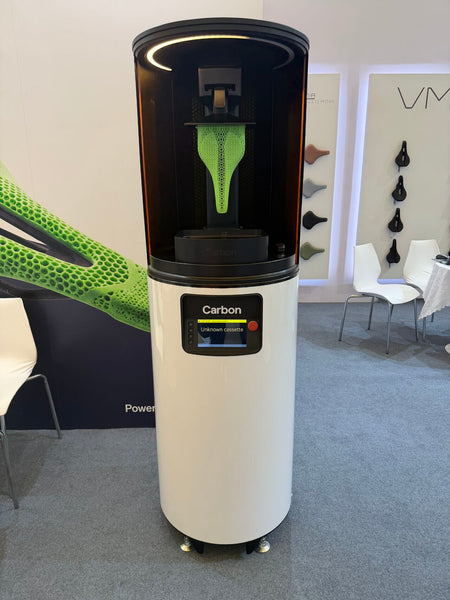
An Italian workshop just put a 3D printer the size of a washing machine on sale, with a build area of a full cubic metre — one metre wide, one metre deep, and one metre tall. It carries an industrial price tag and is made to order for carmakers and factories. But this giant is a wonderful excuse to understand the same technology sitting on desks in bedrooms, classrooms, and garages everywhere.
That technology is called FDM, short for Fused Deposition Modeling. An FDM printer takes a spool of plastic filament, melts it through a hot nozzle, and draws each layer of your object one line at a time. Layer stacks on layer until a flat outline slowly grows into a solid model. Almost every affordable home 3D printer works this exact way, whether it is making a keychain or a life-size helmet.
The headline number on any printer is its build volume: the biggest single piece it can make. A desktop machine might give you a 22-centimetre cube to play with, while this new large-format system offers a hundred times more room. Bigger is tempting, but it comes with trade-offs. Large prints use more filament, run for many hours or even days, and are far more likely to warp as all that plastic cools and shrinks. Understanding build volume helps you match a printer to the projects you actually want to make.
You do not need a metre-tall machine to think big, though. If a model is larger than your bed, your slicing software can cut it into sections that print separately and glue together afterward. To fight warping on any size print, keep your first layer well calibrated, add a brim for extra grip, use a heated bed, and shield the printer from cold drafts so the temperature stays steady. These simple habits are what separate a clean print from a peeling mess.
Want to put this into practice? Whether you run a compact starter printer or you are dreaming of something huge, Flarelab has beginner-friendly filament, tools, and guides to help you get flat, reliable prints. Explore the full range at flarelab.com and start your next build with confidence.
Frequently asked questions
What does FDM stand for?
FDM means Fused Deposition Modeling. The printer melts a plastic filament and lays it down in thin layers that stack up into a finished object. It is the most common and most affordable type of home 3D printing.
Why does build volume matter?
Build volume is the largest object your printer can make in one piece. A bigger volume lets you print tall vases, helmets, or props without slicing them into sections, but larger machines also cost more and take much longer to finish a print.
Can I print big models on a small printer?
Yes. Slicing software can split a large model into pieces that fit your bed, and you glue them together afterward. It takes a little planning, but you can build objects far bigger than your printer's stated size.
Why do big prints warp or fail more often?
The wider a layer, the more the plastic shrinks as it cools, which can lift corners off the bed. A heated bed, a brim, an enclosure to keep heat steady, and a well-calibrated first layer all help keep large prints flat.
Inspired by reporting from 3D Printing Industry. Rewritten and expanded by Flarelab with original beginner guidance. Flick the Fox says: keep your first layer flat! 🦊