Every 3D print has its own story — and at Flarelab, that story starts with creativity and ends with a design that's functional, durable, and proudly made by local makers.
From helmet hooks to controller stands, each piece goes through a careful process — from idea, to design, to testing — before it reaches your hands. Tara, silipin natin kung paano ginagawa ang bawat FlareLab creation.
🧠 Step 1: Concept and Inspiration
Lahat nagsisimula sa simpleng problema.
Maybe your desk is messy, your cables are everywhere, or your helmet has no proper spot. Then the question hits: "Pwede bang gawan ng mas maayos na design?"
From that idea, we start sketching — imagining how to make something that looks good, works great, and lasts long.
💻 Step 2: 3D Modeling and Design
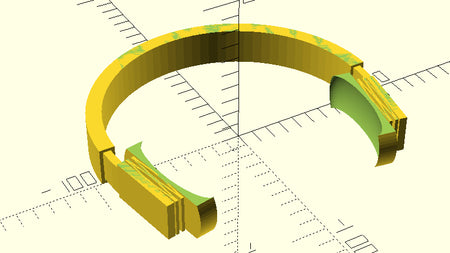
After finalizing the concept, we move to 3D design using software like Tinkercad or Fusion 360. Dito namin inaayos bawat curve, sukat, at detalye ng produkto.
We make sure the design fits perfectly with its purpose — whether it's for your gaming controller, Wi-Fi router, or motorcycle gear. Hindi lang basta aesthetic, dapat practical din.
🧾 Step 3: Prototype Printing
Once ready, we move on to the first test print — the exciting part!
We load our chosen filament (usually PLA+ or PETG), and let the printer bring our idea to life.
Each prototype helps us see if the thickness, shape, and fitting are right. Minsan, kailangan mag-reprint ng dalawang o tatlong beses — kasi sa FlareLab, we don't settle for "pwede na."
🧪 Step 4: Testing and Refinement
Ito ang hands-on stage — where we test the strength and functionality of each prototype.
If it's a helmet hook, we hang an actual helmet to check its load.
If it's a controller stand, we test different types to make sure it's stable.
If it's a router mount, we check cable management and signal clearance.
We only move forward kapag pasado sa aming standards — matibay, maayos, at maganda.
🧱 Step 5: Final Print and Finishing Touches
After all the testing, we print the final version using the best settings for smooth surface and strong build.
Then we do some polishing — trimming small imperfections and cleaning every edge — until we get that clean, professional finish na FlareLab quality.
🔧 Step 6: Quality Check and Packaging
Before we send it to you, each product goes through a final inspection. We make sure everything fits right and looks perfect.
We also include the screws, wall plugs, or accessories you'll need — so you can install and enjoy your FlareLab product right away.
🚀 Built by Makers, for Makers
At Flarelab, we don't just sell 3D prints — we create with passion.
Every product we design is the result of hours of testing, fixing, and improving.
That's why each piece is special — not factory-made, but craft-made.
When you hang your helmet, display your Funko Pop, or organize your gaming setup, you're not just using a product — you're using a piece of our creativity.
We believe that creativity is meant to be shared — built layer by layer, idea by idea. Every print we make tells a story of innovation, patience, and Pinoy craftsmanship.
Choose where creativity takes shape — choose FlareLab.
Frequently asked questions
What software does Flarelab use to design products?
The team uses Tinkercad for fast iteration on simple shapes and Fusion 360 for technical parts that need precise dimensions, tolerances, and parametric features. Both programs let designers tweak a model quickly and re-export the file for a new print test.
How many prototypes does a typical product go through?
Most accessories see 2–3 print iterations before they're approved. The first usually catches fit issues, the second refines wall thickness or comfort, and the third locks in the production-ready version.
What materials are used for testing vs final products?
PLA+ is the workhorse for most testing and final prints because it captures detail well and stays dimensionally stable. PETG is used when a part needs extra toughness or heat resistance, like router mounts and outdoor accessories.
How does Flarelab test if a product is strong enough?
Real-world testing. Helmet hooks get an actual helmet hung from them, controller stands get different controllers tried in them, and router mounts are checked for cable clearance and signal integrity. If a part fails, the design goes back to the drawing board.
Are Flarelab products handmade or machine-made?
They're machine-printed but hand-finished. The 3D printer produces the part, then a maker trims any imperfections, smooths edges, and inspects the print before packaging. That's why we call them craft-made rather than factory-made.
Can I request a custom design with this same process?
Yes. Flarelab applies the same six-step process to custom client work. Visit flarelab.com with your concept and the team will guide it from sketch to finished print.