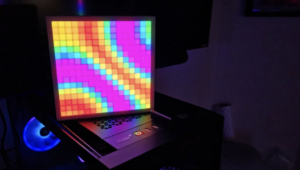
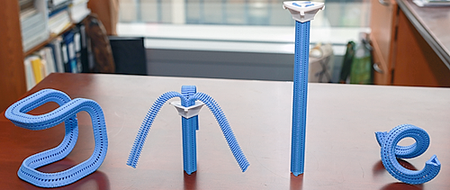
Ever wished you could change a lamp's whole personality without buying a new one? A clever modular smart lamp design does exactly that: it wraps a standard E26 light bulb socket in a set of 3D printed parts that snap together, so you can go from minimalist to funky in the time it takes to twist a bulb.
The magic is in the collet system. Instead of gluing one fixed shade to one fixed base, every piece connects through the same interlocking joint. That means the shade, the stem, and the foot are all separate printed components that grip each other snugly. Want a taller lamp for your desk? Print a longer stem. Prefer a soft diffused glow? Swap in a lattice shade. Because everything centers on the humble E26 bulb base found in most homes, you are not designing around a proprietary fitting.
What makes this a great 3D printing project for beginners is that it is remix-friendly by design. The original creator built it so parts can be mixed, matched, and redesigned, which means you can start with the ready-made files and slowly make them your own. It is a gentle introduction to modular design thinking, where one smart connection standard unlocks endless variations instead of a single throwaway print.
To make one yourself, download the model files, then slice them for your printer. Most pieces print cleanly in PLA with a 0.2mm layer height and light infill around 15 percent, since a lamp housing carries almost no load. Print the shade and base separately, let them cool fully, then press-fit the collet joints together. Add your smart bulb, screw the assembly onto the E26 socket, and you have a fixture you can restyle any weekend. If a joint feels loose, bump your extrusion width or scale the collet up by a fraction of a millimeter for a firmer grip.
Try it on your printer. If you are just getting into functional prints like this, the right filament and a well-tuned printer make all the difference between a wobbly shade and a crisp one. Browse guides, filament, and printer-ready gear at Flarelab to set your modular smart lamp up for success.
Frequently asked questions
What filament should I use for a 3D printed lamp shade?
PLA is perfect for most lamp housings because it prints easily and holds detail. Keep the bulb an LED type so heat stays low, since PLA softens at higher temperatures. For fixtures near warmer bulbs, PETG is a sturdier choice.
Do I need supports to print the modular parts?
Usually very few. Most collet-based lamp parts are designed to print upright with minimal overhangs. Slice a preview first, and only enable supports on steep overhangs like decorative cutouts.
What is an E26 bulb base?
E26 is the standard screw-in socket size used for most household light bulbs in North America. Building the lamp around it means you can use ordinary smart bulbs you already own instead of a special fitting.
Can I redesign the parts myself?
Yes. The design is remix-friendly, so you can lengthen the stem, reshape the shade, or add your own patterns as long as you keep the shared collet joint that lets pieces connect.
Inspired by a modular smart lamp shared by Embrace Making on MakerWorld, spotted via Adafruit's #3DThursday. Rewritten and expanded by Flarelab. Original source.